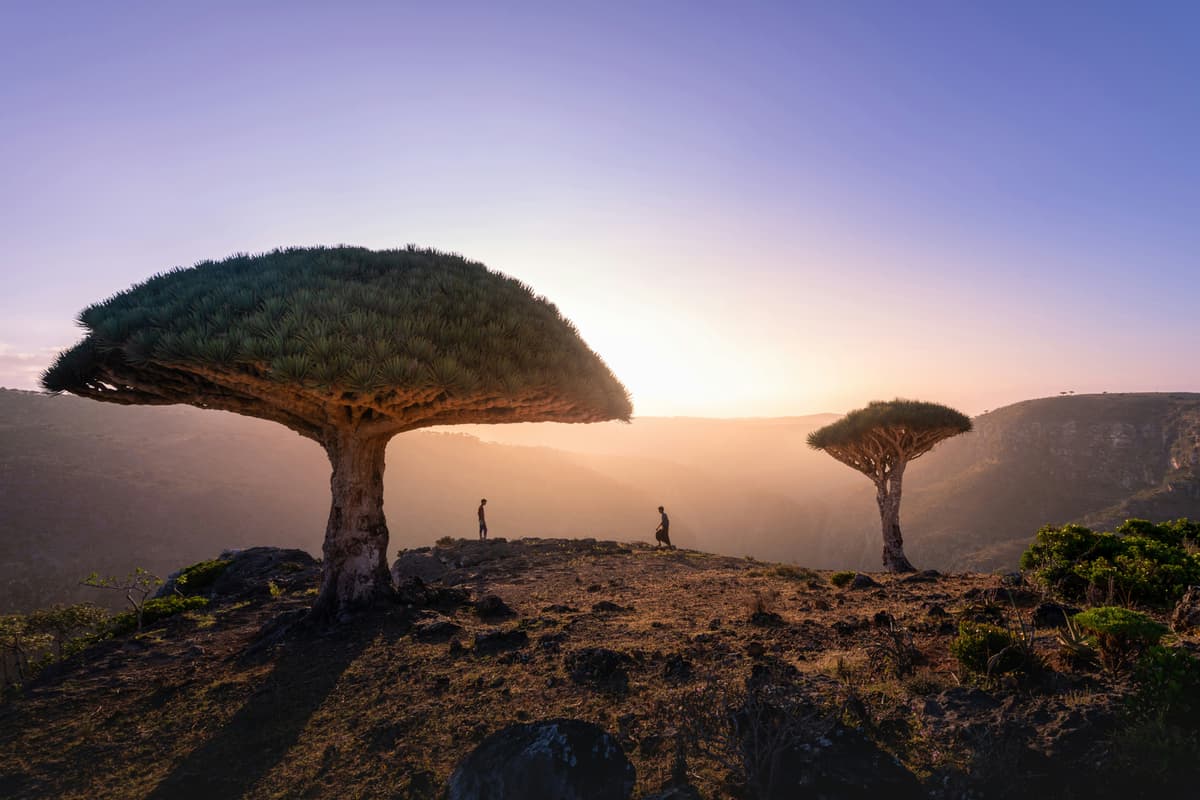
Discover Socotra: Yemen’s Alien Island of Wonders
Socotra’s iconic Dragon’s Blood Tree with its unique umbrella-shaped crown
Socotra, the largest island in the Socotra Archipelago, lies 380 kilometers south of the Arabian Peninsula. Its isolation gives rise to a landscape so unusual it is often called the 'most alien-looking place' on Earth. Socotra’s flora and fauna display extraordinary endemism, with 37% of its plants and 90% of its reptiles found nowhere else. This contributed to its UNESCO World Heritage status in 2008 .
The indigenous Socotri people, who speak the ancient South Semitic Soqotri language alongside Arabic, preserve a distinct cultural identity shaped by centuries of isolation and adaptation to a harsh, beautiful environment .
A Journey Through Socotra’s History
Socotra’s archaeological record begins around 1000 BCE, with ancient tombs and traces of early settlements. The island’s name may stem from a Sanskrit term meaning 'island abode of bliss', and legends once held Socotra as the mythical home of the phoenix [web:4].
Socotra entered the Islamic world in the 7th century but retained its cultural isolation. Portuguese forces briefly occupied the island in the early 1500s before ceding it to local Mahra sultans. By the 1880s, Socotra fell under British protection, remaining with the Mahra Sultanate until joining South Yemen after 1967. Since Yemeni unification in 1990, Socotra has faced shifting political currents and increased outside attention [web:4][web:7].
Modern Era: Instability and Change
Socotra’s strategic location has made it a focal point in regional geopolitics. Recent years have brought humanitarian crises from cyclones, and growing UAE influence, including aid, military bases, and political control through the Southern Transitional Council (STC). Since 2020, the STC administers the island amid ongoing tensions with Yemen’s central government. Locals have protested foreign bases and resource monopolization, calling for respect of their sovereignty and rights [web:10][web:13][web:7][web:16].
Natural Wonders: Biodiversity Beyond Compare

Socotra’s coastline with endemic plants and turquoise water
Socotra’s isolation has created one of the world’s great biodiversity hotspots. The island boasts 825 plant species (307 endemic), including the legendary Dragon’s Blood Tree and rare frankincense, bottle trees, and countless endemic birds and reptiles. Bats are the island’s only native mammals. The surrounding waters are home to over 700 species of fish, and more than 250 kinds of coral [web:2][web:3][web:5].
Socotra’s unique ecology earns it the nickname the 'Galápagos of the Indian Ocean', and large swathes of the island are recognized as Important Bird Areas. But conservation faces challenges from climate change, human activity, and changing land use [web:4][web:8].
Socotri Culture and Traditions
Socotra’s people maintain centuries-old customs, including oral storytelling, poetry, and handicrafts. Their livelihoods depend on fishing, herding, and small-scale agriculture. The island’s isolation has helped preserve the Soqotri language, which features extensive vocabulary for local flora and livestock, and unique religious customs—a transition from early Christianity to Islam centuries ago [web:14].
Community-based conservation and educational projects foster environmental stewardship, preserving both nature and culture. Multilingualism is common, with Soqotri and Arabic spoken widely.
Tourism: Exploring Socotra’s Alien Beauty
Socotra’s surreal landscapes, from limestone plateaus and turquoise beaches to forests of outlandish trees, attract adventure travelers and nature enthusiasts. Popular activities include trekking, snorkeling, birdwatching, and cultural immersion. Political instability and infrastructure limitations pose challenges, but responsible ecotourism offers hope for both conservation and cross-cultural exchange
Challenges and Hope for the Future
Socotra faces ongoing threats—political instability, climate pressures, and rapid social changes. The island’s strategic location complicates governance, but community-driven conservation and growing global awareness offer optimism. Its future rests on balancing development, environmental stewardship, and cultural preservation.

Written by VoyZee Team
Official VoyZee editorial team
