
Stop Using Google Sheets to Track Your Travels (Here's What Works Better)

Person looking frustrated at a laptop showing a complicated spreadsheet
Let me guess: you started tracking your travels with the best intentions. Maybe you created a Google Sheet with columns for country, city, dates visited, and a few notes. Perhaps you even color-coded it or added formulas to count your destinations. You told yourself you'd keep it updated after every trip.
How's that working out for you?
If you're like most travelers who've gone down the spreadsheet route, your travel tracking system probably falls into one of these categories: abandoned after the initial enthusiasm wore off, months behind on updates, or maintained with such effort that it feels more like a chore than a celebration of your adventures.
Here's the uncomfortable truth: Google Sheets is a terrible tool for tracking travel. Not because it doesn't work—you can technically make it work—but because it transforms what should be an inspiring, visual, and enjoyable experience into administrative drudgery.
Let's explore why the spreadsheet approach fails most travelers, what you're actually trying to accomplish with travel tracking, and what solutions actually deliver on the promise of helping you visualize, remember, and plan your global adventures.
Why Google Sheets Seems Like a Good Idea (At First)

Clean, organized travel spreadsheet on a laptop screen with colorful headers
The appeal of Google Sheets for travel tracking is obvious. It's free, accessible from anywhere, highly customizable, and you probably already know how to use it. You can create exactly the structure you want with whatever columns matter to you.
In the initial setup phase, creating your travel spreadsheet can even feel satisfying. You're organizing your past trips, maybe adding some formulas to calculate statistics, perhaps even creating separate tabs for wish lists and trip planning. You might spend an hour or two getting everything just right.
That dopamine hit of organization is real. You've created a system! You're a person who has their travel life together! You've got this!
Where the Spreadsheet System Falls Apart
The problem reveals itself gradually, usually within weeks of that initial setup. Here's what actually happens:
The Update Friction Problem
Every time you want to add a new trip, you face friction. You need to open Google Sheets, find your travel document (which is now buried somewhere in your Drive), remember what format you were using, and manually type in all the information. If you're on mobile, the experience is even more cumbersome.
This friction means you procrastinate. You tell yourself you'll update it "later when you have time." Later becomes weeks, then months. Eventually, you can't remember the exact dates of that trip to Vietnam, or which cities you visited in Spain, or whether you went to Morocco in 2019 or 2020.
The Visualization Void
Spreadsheets are fundamentally anti-visual. You're looking at rows and columns of text, maybe with some colored cells if you got fancy. But humans are visual creatures. We process images 60,000 times faster than text. We remember visual information better than lists.
When you look at a spreadsheet of your travels, you don't see your journey. You see data. There's no map showing your global footprint, no visual representation of how far you've come, no immediate sense of which continents you've explored versus which remain untouched.
A spreadsheet can tell you that you've visited 23 countries, but it can't show you what that means in any visceral way. It can't inspire you the way a beautifully visualized map can.
The Inspiration Gap
Travel tracking shouldn't just be about recording the past—it should inspire your future. But spreadsheets are backward-looking by nature. They're archives, not inspiration boards.
When you're dreaming about your next trip, does opening a Google Sheet get you excited? Does scrolling through rows of data help you visualize your next adventure? For most people, the answer is no. The format itself kills the wanderlust that should drive travel planning.
The Sharing Awkwardness
Want to share your travel experiences with friends or family? Good luck making a spreadsheet engaging. You could share the link, but who wants to scroll through someone else's data table? You could screenshot it, but that's even less appealing.
The social and communal aspects of travel—swapping stories, getting recommendations, inspiring others—don't translate well to spreadsheet format. Your travel experiences deserve a medium that can be shared with the same excitement you felt while traveling.
The Context Collapse
A spreadsheet reduces rich, multi-dimensional experiences to flat data points. Vietnam becomes "Vietnam | Hanoi, Ho Chi Minh City | April 2023." But what about the incredible street food? The motorbike ride through rice paddies? The local family who invited you to dinner? The temple that took your breath away?
You could add a notes column, sure. But lengthy notes make spreadsheets unwieldy, and even then, text descriptions can't capture what photos, maps, and visual layouts can.
The Statistical Obsession Trap
Spreadsheets encourage you to focus on metrics that might not actually matter. When your travel tracking revolves around numbers in cells, you start optimizing for the wrong things. You might start caring more about increasing your country count than about having meaningful experiences.
The spreadsheet mindset can turn travel into a numbers game. "I need to visit three more countries this year to hit my target." But did you actually want to visit those countries, or are you just feeding the spreadsheet?
What You're Actually Trying to Accomplish

Traveler looking at a laptop showing a travel map while holding a physical map
Before exploring better solutions, let's get clear on what travel tracking should actually do for you:
- Memory Preservation: You want to remember where you've been, when you went, and what made each place special. Years from now, you want to recall your adventures with clarity and detail.
- Visual Representation: You want to see your travel footprint on a map, understand your patterns, and get a sense of how far you've come and where gaps remain.
- Inspiration and Planning: Your tracking system should help you identify where you want to go next, discover new possibilities, and maintain excitement about future travels.
- Social Sharing: You want an easy way to share your travel experiences with others, whether that's showing friends your map or getting recommendations for upcoming trips.
- Goal Setting and Progress: If you have travel goals—continents, country counts, or themed objectives—you want to track progress in a motivating way.
- Easy Maintenance: Whatever system you use needs to be so simple and enjoyable that you'll actually keep it updated. If it feels like work, it won't survive.
The right travel tracking solution delivers on all these needs. A spreadsheet delivers on maybe one or two.
What Actually Works: The Requirements for Effective Travel Tracking
Based on thousands of travelers' experiences and the psychology of habit formation, here's what an effective travel tracking system needs:
Visual and Interactive Maps
Your tracking system must include an actual map where you can see your travels plotted geographically. This isn't optional—it's central to the entire experience. A map gives you instant visual feedback, helps you identify patterns, and makes your achievements tangible.
The map should be interactive, allowing you to zoom into regions, see details about specific trips, and easily add new destinations. Static maps (like those scratch-off posters) are better than spreadsheets but still limited—you can't edit them if you remember new details, they don't update dynamically, and they can't be accessed on your phone.
Minimal Input Friction

Smartphone showing an intuitive travel tracking app with simple tap-to-add interface
Adding a new trip should take seconds, not minutes. The interface should be intuitive enough that you can update it immediately after returning from a trip, or even while traveling. Mobile-first design is crucial here—most people want to update their travels from their phones.
The system should auto-populate as much information as possible. When you select "Japan," it should know the capital, flag, continent, and other basic details without you typing anything.
Rich Context Beyond Just Names
Each destination should support more than just the country name. You should be able to add cities visited, dates, photos, notes, ratings, or whatever details matter to you—but all of this should be optional and non-intrusive. The system shouldn't force you to fill out ten fields when you just want to quickly log a trip.
Intelligent Statistics and Insights
Rather than manually calculating formulas, your tracking system should automatically generate interesting statistics. How many countries have you visited? Which continents are you exploring most? What percentage of the world have you seen? These insights should update in real-time as you add destinations.
Discovery and Inspiration Features
The best tracking systems don't just record the past—they help you plan the future. This might include destination suggestions based on your travel patterns, curated lists of overlooked countries, or easy ways to identify gaps in your geographic coverage.
Shareable and Social
Your travel map should be easily shareable, whether you want to show it to friends in person, post it on social media, or send it to family. The shareable version should be visually appealing, not a screenshot of a data table.
Optional social features—seeing where other travelers have been, getting recommendations, or connecting with people who've visited similar places—can add value without being intrusive.
Works Across Devices
You should be able to access and update your travel tracking from your phone, tablet, or computer seamlessly. Your data should sync automatically so you never worry about losing information or having outdated versions.
Respects Your Privacy
Your travel history is personal. The right system gives you control over what's public versus private, and doesn't treat your data as a product to be sold or mined.
The Modern Solutions That Actually Deliver
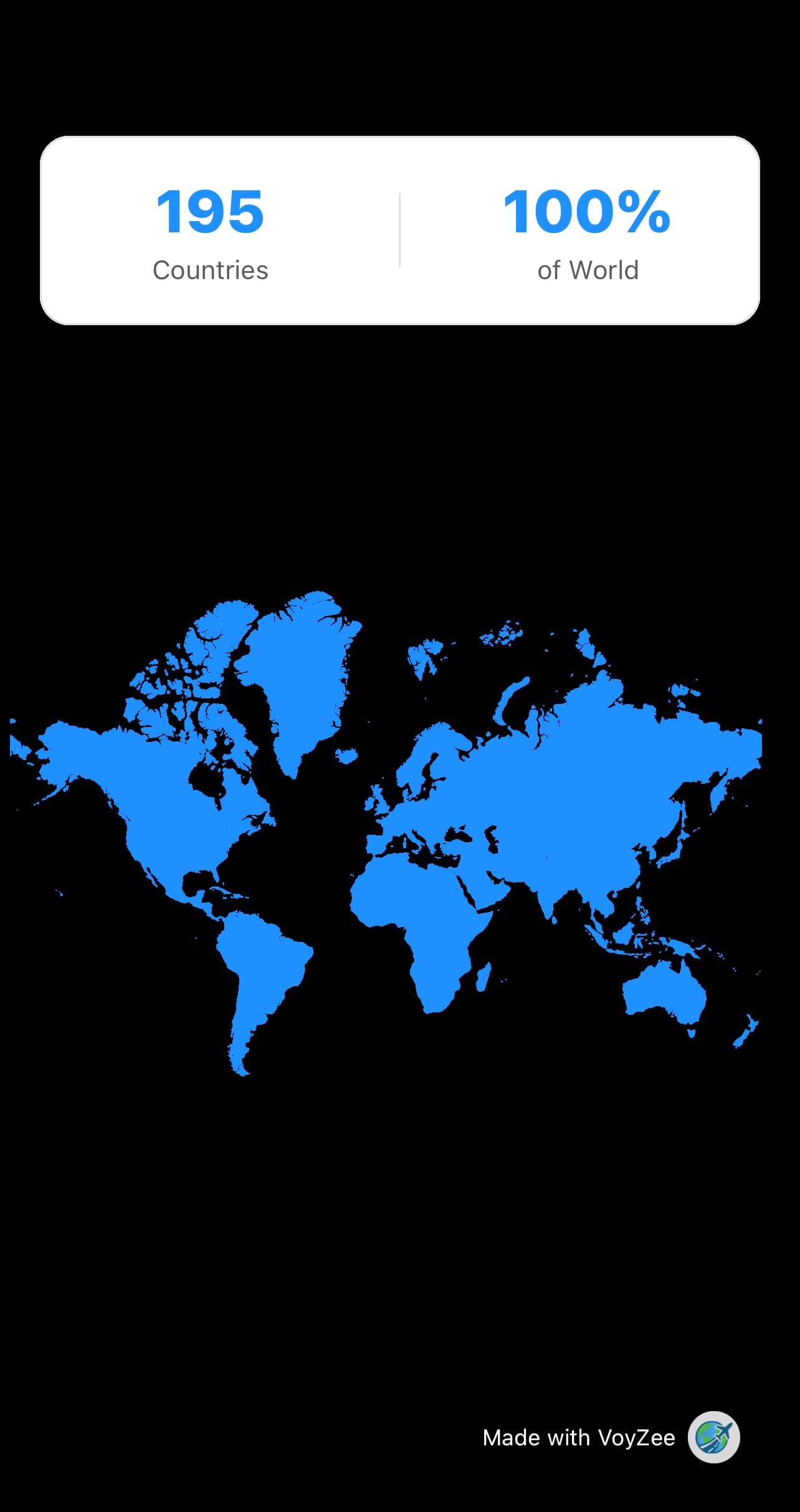
Dashboard of a modern travel tracking app showing map, statistics, and trip cards
So if not Google Sheets, what should you use? The good news is that the last few years have seen an explosion of purpose-built travel tracking tools that actually understand what travelers need.
Dedicated Travel Tracking Apps
Purpose-built travel apps have emerged as the gold standard for tracking adventures. These apps are designed from the ground up around the visual, interactive experience that travelers actually want.
The best ones offer interactive world maps where your visited countries are beautifully highlighted, instant statistics that update as you explore, mobile-first interfaces that make updates effortless, and photo integration so your memories are connected to locations. They often include discovery features to help you plan future trips and social options to connect with fellow travelers.
Unlike spreadsheets, these apps understand the psychological aspects of travel tracking. They're designed to inspire, not just record. They turn the act of updating your travels from a chore into a pleasure.
Smart Travel Journals

Digital travel journal entry with photos, maps, and handwritten-style notes
Some travelers prefer a more narrative approach. Smart travel journal apps combine location tracking with diary-style entries, creating a rich multimedia record of your adventures. These work particularly well for travelers who want to capture not just where they went, but what they felt, saw, and experienced.
The best journal apps let you tag entries with locations, include photos and videos, and automatically organize content by trip or destination. They're searchable, so you can find that restaurant recommendation you wrote about in Bangkok three years ago.
The downside? They require more effort to maintain than simple tracking apps, and they don't always provide the visual map experience that many travelers crave.
Hybrid Approaches
Some travelers find success combining tools—using a dedicated tracking app for the visual map and statistics, while maintaining a separate journal or photo organization system for deeper memories. This approach gives you the best of both worlds but does require managing multiple platforms.
The Physical Alternative: Smart Travel Maps
If you prefer something tangible, modern scratch-off or pin maps offer a satisfying physical experience. The newer versions are beautifully designed, include interesting details beyond just country borders, and provide that tactile pleasure of marking your progress.
However, physical maps have obvious limitations: they can't be updated digitally, you can't access them while traveling, they're difficult to share online, and they don't generate statistics or provide planning features.
Making the Switch: How to Leave Spreadsheets Behind
If you're currently using Google Sheets and recognize yourself in this article, here's how to make the transition:
- Export Your Data: Most dedicated travel apps allow you to import existing data. At minimum, have a list of countries you've visited with approximate dates.
- Choose Your Platform: Research a few purpose-built travel tracking solutions. Look for one that matches your specific needs—whether that's simplicity, social features, privacy focus, or detailed statistics.
- Do One Big Update: Set aside thirty minutes to input your travel history into your new system. This is where you'll appreciate how much better the interface is than a spreadsheet—the process will actually be enjoyable.
- Build the Habit: Place your new travel app somewhere accessible on your phone. Make it part of your post-trip ritual to update it within a day or two of returning.
- Explore the Features: Don't just use your new tool as a glorified spreadsheet. Explore the map, check out the statistics, look at destination suggestions, and engage with any community features.
- Share Your Map: Once you've set everything up, share your travel map with friends or on social media. This creates positive reinforcement and makes the new system feel worth maintaining.
The Spreadsheet Exception
There is exactly one scenario where Google Sheets remains the best tool: if you need extremely customized data fields that no existing app supports, and you're genuinely excited about maintaining a detailed database.
For example, if you're tracking incredibly specific information—like the number of UNESCO World Heritage sites visited in each country, or detailed budget breakdowns for every trip, or wine regions explored—you might need the flexibility of a spreadsheet.
But for 95% of travelers, this level of customization isn't necessary or desired. The standard features of good travel tracking apps cover everything most people actually want to track.
What This Means for Your Travel Life

Smiling traveler looking at a travel tracking app on a tablet while surrounded by travel memorabilia
Switching from Google Sheets to a purpose-built travel tracking solution isn't just about having a prettier map (although that's nice). It's about removing friction from a practice that should bring you joy.
When travel tracking is easy and visually rewarding, you're more likely to maintain it. When you maintain it, you preserve your memories better. When you can see your progress on a map, you're more motivated to keep exploring. When your system includes discovery features, you're inspired to plan your next adventure.
The right tool transforms travel tracking from administrative busy-work into an ongoing celebration of your adventures and a springboard for future exploration.
Your travels deserve better than rows in a spreadsheet. They deserve a system that captures the excitement, beauty, and achievement of your global journey. They deserve a platform that makes you want to open it, that reminds you how far you've come, and that inspires you to keep going.
The Bottom Line
Google Sheets is an amazing tool for financial tracking, project management, data analysis, and countless other applications. But tracking the richness of your travel experiences? It's simply the wrong tool for the job.
You wouldn't use a hammer to paint a picture or a calculator to compose music. Similarly, you shouldn't use a spreadsheet designed for numerical analysis to capture the visual, emotional, and geographical reality of your global adventures.
The good news is that you don't have to. Purpose-built solutions exist that were designed by travelers, for travelers, with a deep understanding of what makes travel tracking meaningful versus tedious.
Your spreadsheet served its purpose—it proved you wanted to track your travels. Now it's time to graduate to a system that actually delivers on that desire, that makes the tracking effortless, and that turns your travel history into something you're genuinely excited to look at and share.
The world is too beautiful, your adventures too meaningful, and your time too valuable to waste on the wrong tool. Make the switch. Your future traveling self will thank you.
Ready to see your travels the way they deserve to be seen? VoyZee Travel offers an intuitive, visual way to track your adventures, plan your next trip, and celebrate how far you've come. Because your journey deserves more than a spreadsheet.

Written by VoyZee Team
Official VoyZee editorial team
