What Your Travel Map Says About You: 6 Traveler Personality Types

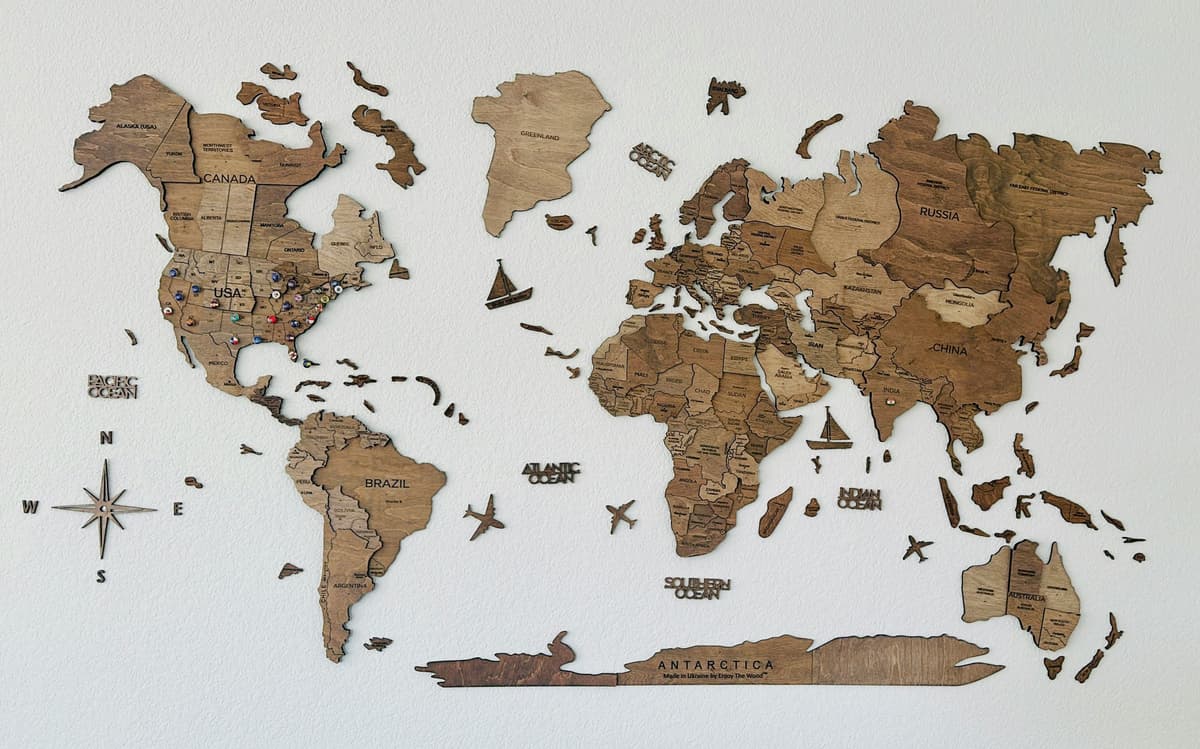
Person analyzing patterns on a world map with travel markers
Pull up your travel map right now. Go ahead, whether it's a scratch-off poster on your wall, a digital tracker on your phone, or a mental inventory you've been keeping for years. Now take a good look at the patterns. Where are your pins clustered? Which continents have you conquered, and which remain untouched? Are your destinations scattered randomly across the globe, or do they follow a deliberate path?
Your travel map is more than just a record of places you've been. It's a psychological fingerprint, revealing deep truths about your personality, priorities, and approach to life. Just as handwriting analysts claim to read character in your script, your travel patterns tell a story about who you are and what drives you.
Let's explore the six major traveler personality types and see which one resonates with your journey.
The Completionist: Gotta Catch 'Em All
Map Pattern: Methodical coverage with clear goals—all of Europe, every US state, or a mission to hit all seven continents.
You're the traveler with a spreadsheet. You don't just visit countries; you conquer them systematically. Your map shows intentional clustering—you've thoroughly explored Southeast Asia or meticulously worked your way through South America. You might have color-coded systems, detailed notes, and specific numerical goals.
Completionists are driven by achievement and organization. You love the satisfaction of filling in gaps on your map, and you plan trips strategically to maximize geographical coverage. You've probably visited neighboring countries on the same trip to efficiently "complete" a region.
Your strength: You ensure diverse experiences and are unlikely to overlook hidden gems in pursuit of thoroughness. Your systematic approach means you've probably discovered amazing places others miss while rushing between famous capitals.
Your growth edge: Sometimes you might rush through a destination just to check it off, potentially missing the magic that comes from slowing down. Consider that some places deserve multiple visits, and your map doesn't need to be complete to be meaningful.
Famous completionist: Graham Hughes, the first person to visit all 193 UN member states without flying.
The Depth-Seeker: Quality Over Quantity
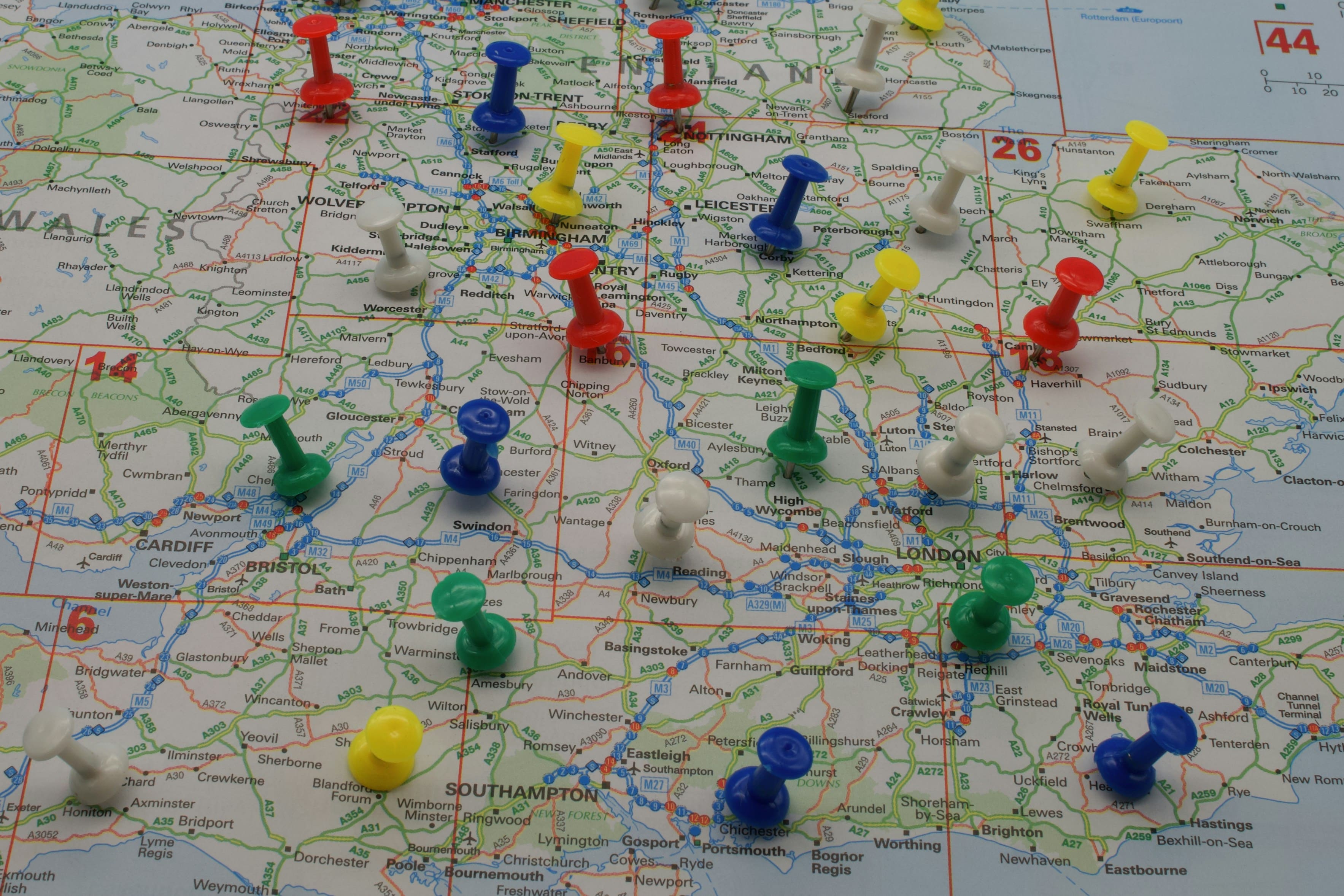
Map with few markers but multiple pins in the same countries
Map Pattern: Fewer pins, but often multiple pins in the same countries. Your map might look sparse compared to others, but each pin represents profound experiences.
You're the anti-completionist. While others rush through ten countries in a month, you've spent months in just two or three. Your map might show you've visited only fifteen countries, but you've returned to Thailand five times, lived in Spain for a year, and spent six weeks really understanding Vietnam.
Depth-seekers prioritize meaningful experiences over passport stamps. You learn phrases in the local language, befriend locals, understand cultural nuances, and often have "second homes" abroad where you're recognized by shopkeepers and restaurant owners.
Your strength: You gain genuine cultural understanding that superficial travelers never achieve. Your experiences are richer, your memories more vivid, and your connections more authentic.
Your growth edge: Your comfort with familiar places might prevent you from experiencing the breadth of global diversity. Challenge yourself occasionally to step into the unknown of a completely new region.
Travel philosophy: "I haven't been everywhere, but it's on my list of places to go back to."
The Comfort Zone Cruiser: Safe and Savvy
Map Pattern: Concentrated in developed countries with strong infrastructure—Western Europe, Australia, New Zealand, Japan, Canada, and maybe some resort destinations.
You travel to enjoy yourself, not to prove anything. Your map features countries with excellent healthcare, reliable transportation, English-speaking populations, and well-established tourist infrastructure. You appreciate beautiful beaches, good wine, comfortable hotels, and the assurance that things will generally work as expected.
Comfort Zone Cruisers are often practical, value-oriented, and focused on relaxation and enjoyment rather than extreme adventure. You've probably never slept in a hostel dormitory, and you're perfectly fine with that.
Your strength: You actually relax on vacation. You return home refreshed rather than exhausted. You've mastered the art of stress-free travel and genuinely enjoy your trips without constant anxiety.
Your growth edge: Some of life's most transformative experiences happen outside our comfort zones. Consider testing yourself with one slightly more adventurous destination—you might discover capabilities you didn't know you had.
Your motto: "Adventure is wonderful, but so is a reliable shower and good Wi-Fi."
The Adventure Junkie: Off the Beaten Path

Map with markers in developing countries and remote regions
Map Pattern: Heavy on developing nations, conflict-zone borders, and remote regions. Your map includes countries many people can't locate on a map.
Your travel map reads like a list of places most people's parents would worry about them visiting. Central Asia, Sub-Saharan Africa, parts of the Middle East, and remote Pacific islands feature prominently. You've probably arrived at borders where the officials seemed genuinely surprised to see a tourist.
Adventure Junkies crave authentic experiences and pride themselves on going where few others dare. You collect challenging travel stories the way others collect souvenir magnets. You've probably had food poisoning more than once, navigated language barriers in places without English signage, and have your own systems for dealing with unreliable transportation.
Your strength: You've seen the world as it truly is, not just its polished tourist face. Your experiences are genuinely unique, and you've developed impressive adaptability and resourcefulness.
Your growth edge: Sometimes the constant pursuit of "extreme" travel can become its own kind of checkbox mentality. Remember that popular destinations became popular for good reasons, and there's no shame in occasionally choosing ease.
Your badge of honor: That time you spent 36 hours on a chicken bus in Central America, or when you accidentally ended up at a Kyrgyz wedding in a mountain village.
The Budget Backpacker: Maximum Miles, Minimum Money

Map with concentration in affordable regions like Southeast Asia and Central America
Map Pattern: Heavy concentration in affordable regions—Southeast Asia, Central America, Eastern Europe, and South Asia.
Your travel map tells an economic story. You've expertly navigated the world's most budget-friendly destinations, stretching every dollar to maximize time abroad. You know which countries offer incredible value, where a comfortable private room costs $10, and where street food is both delicious and safe.
Budget Backpackers are resourceful, flexible, and often younger or in life transitions that prioritize experiences over earnings. You've mastered the art of cheap flights, overnight buses that save accommodation costs, and the global hostel network.
Your strength: You've proven that extensive travel doesn't require wealth. Your resourcefulness and openness to basic conditions allow you to travel for months on what others spend on a week.
Your growth edge: As you grow and your circumstances change, remember to occasionally treat yourself to comfort. Sustainable long-term travel sometimes means balancing budget adventures with recuperative comfort.
Your skills: Finding $50 flights, negotiating prices, knowing exactly which hostels have the best kitchens, and stretching $20 across three days.
The Collector: Chasing UNESCO Sites, Natural Wonders, and Bucket List Highlights

Map with strategic markers on iconic destinations across all continents
Map Pattern: Strategic hits across all continents, focused on iconic destinations. Your pins land on Peru (Machu Picchu), Egypt (Pyramids), India (Taj Mahal), and other greatest-hits destinations.
You travel with purpose and priorities. Your map shows you've seen the Northern Lights, stood at Angkor Wat at sunrise, trekked to Everest Base Camp, and snorkeled the Great Barrier Reef. You research the "must-sees" and plan trips around these anchor experiences.
Collectors appreciate that certain places have earned their fame through genuine magnificence. You're not trying to avoid tourists; you're trying to witness humanity and nature's most spectacular achievements.
Your strength: You ensure you don't miss the genuinely extraordinary. Your travel experiences include moments of profound awe that come from witnessing world-class wonders.
Your growth edge: The pressure to see everything "important" can create an exhausting, checkbox approach. Remember that your most meaningful travel moment might happen in a random alley or café, not at a famous monument.
Your Instagram: Features recognizable landmarks, stunning sunrises at iconic locations, and the classic "perspective" photo holding up the Leaning Tower of Pisa.
What Does Your Map Really Say?
Here's the truth: most travelers don't fit neatly into one category. You might be a Budget Backpacker in your twenties who evolves into a Depth-Seeker in your thirties, or a Completionist who occasionally takes adventure junkie side quests. Your travel personality can shift with life stages, financial situations, and personal growth.
The real question isn't which type you are, but whether your travel map reflects who you truly want to be. Does your pattern of pins make you genuinely happy when you look at it? Are you traveling according to your own values, or trying to impress others? Are you rushing to fill your map or savoring the journey?
Your travel map is uniquely yours. It doesn't need to look like anyone else's to be meaningful. The backpacker who's deeply explored five countries isn't doing it wrong compared to the completionist who's touched fifty. The comfort cruiser enjoying resort destinations isn't less valid than the adventure junkie navigating war-torn regions.
The most self-aware travelers understand their own type and travel accordingly—while occasionally pushing themselves to grow beyond their default patterns. They know their strengths and weaknesses, and they make intentional choices about when to stay in character and when to try something different.
Your Map, Your Story
So take another look at your travel map. What story does it tell? Are you proud of that story? Does it represent your authentic desires or someone else's expectations?
The beauty of travel is that your map is never finished. Every year offers new opportunities to add pins, change patterns, and evolve your travel personality. Maybe this year, the Completionist takes a month-long deep dive in one country. Perhaps the Comfort Cruiser books a challenging trek. The Adventure Junkie might discover the simple pleasure of a well-appointed beach resort.
Your travel map is a living document, constantly evolving as you do. Make it meaningful, make it yours, and above all, make sure it brings you joy.
Curious to see your own travel patterns more clearly? Tools like VoyZee Travel can help you visualize your journey and discover what your unique travel map reveals about you. Because understanding your travel personality is the first step to planning your next perfect adventure.

Written by VoyZee Team
Official VoyZee editorial team
